Yes—a link-in-bio page works as a podcast landing page when its main job is to introduce your show and send listeners to the right listening destination. It does not replace podcast hosting, an RSS feed, or a searchable episode archive. Use it as your show's front door, with a clear promise, a starting episode, and links to listening platforms.
TL;DR
- Can a link in bio page work as a podcast landing page? Yes—for show introductions and listening links.
- AkaMe fits podcasters who want a personalized creator website on a unique domain, with setup handled.
- Keep podcast hosting separate; your landing page directs listeners to existing destinations.
- Choose a larger website when episode archives, transcripts, or detailed show notes are central to your publishing workflow.
Why this matters
Someone arriving from your social profile needs to understand your podcast before choosing where to listen. A page full of unexplained buttons leaves that work to the visitor. A useful podcast landing page gives the show context, then makes the next action obvious.
For your 2026 podcast page, start with the visitor's question: Why should I listen? A custom domain gives that answer a recognizable address. AkaMe combines a personalized creator website with domain registration and publishing handled for you, so you can focus on what the page says.
Can a link in bio page work as a podcast landing page?
Yes, if the page helps a new visitor understand the show, choose an episode, and reach a listening destination. The deciding factor is the job you need the page to do—not whether the builder calls it a bio page or a website.
A compact page works well as an introduction. A larger podcast website serves a different purpose: organizing material that listeners can browse, read, and search.
| Page approach | Best for | Main benefit | Trade-off |
|---|---|---|---|
| Link-in-bio landing page | Social visitors choosing where to listen | Keeps the introduction and listening links together | A long episode archive competes with the main action |
| Dedicated episode landing page | Visitors following a specific episode promotion | Matches the page to the episode being discussed | Needs updating or a separate page for another episode |
| Full podcast website | Shows publishing substantial notes, transcripts, and archives | Gives supporting material its own structure | Requires more content organization and upkeep |
You can use these approaches together. A short bio page can introduce the show and direct visitors to a larger archive elsewhere. You do not need to squeeze every publishing task onto the same screen.
Build the page around a listener's next step
Your podcast landing page should answer a simple sequence: what is the show, why is it relevant, and where do I start? Build around that sequence before adding merchandise, business inquiries, or other creator projects.
State the show promise
Put the podcast name beside a plain description of its subject and intended listener. Explain what someone gets from listening, rather than describing the show only as conversations, stories, or inspiration.
For example, a gardening podcast could introduce itself as practical advice for people growing food in small spaces. That tells a visitor more than a broad invitation to join the conversation. Use your actual subject and audience; do not borrow a promise the episodes do not deliver.
Choose a starting episode
Give a new listener an entry point. Your latest episode is appropriate when it represents the show well; an introductory or especially representative episode is another useful choice.
Label the destination clearly. “Start with this episode” explains the purpose better than an unexplained episode title. Add a short description when the title alone does not establish the topic.
Add listening links
Link to the destinations where your show actually exists. Apple Podcasts, Spotify, and YouTube are relevant examples only when you publish there; do not add a platform simply to make the page look complete.
Use the destination's name in the button label. A listener should know whether a button opens the whole show, a particular episode, or a video before selecting it.
Place secondary actions
Newsletter signup, membership, guest inquiries, and sponsorship information belong below the main listening action when listening is the page's purpose. Include only the destinations that serve your current workflow.
A podcast landing page is not a requirement to promote everything you do. If a link does not help someone listen or take a deliberate next step, leave it off this page.
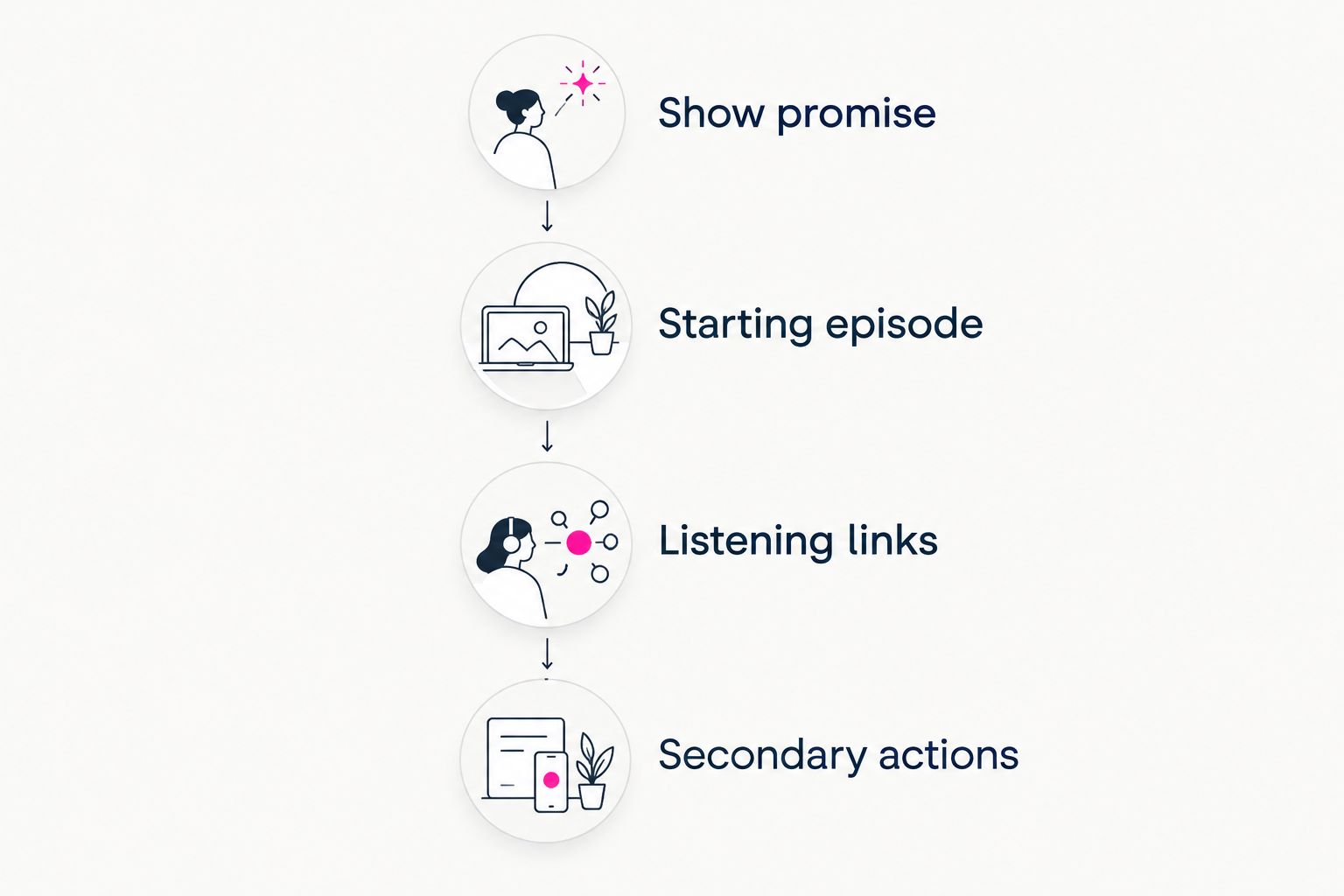
Introduce the show before asking visitors to choose a destination.
Choosing the right fit
Choose the page format around how you publish and what visitors need. Avoid picking a builder because it has the longest feature list; unused features do not clarify your show.
A compact page for introducing your podcast
Best for: podcasters sending social visitors to listening platforms. A focused link-in-bio page is a sensible fit when your audio, subscriptions, or other services already live elsewhere.
The benefit is a clear handoff: introduce the show, recommend a starting point, and let the listener continue in their chosen destination. The trade-off is space and organization. If you keep adding episode descriptions and supporting documents, the introduction becomes harder to find.
A dedicated page for an episode campaign
Best for: podcasters promoting a specific interview, topic, or release. An episode-focused page can explain the subject and put that episode's listening links first.
The benefit is a close match between the promotion and the destination. The maintenance requirement is equally clear: check the page when the campaign changes. A page promoting an older episode is fine when that is intentional, not when the headline and links have been forgotten.
A larger site for a publishing archive
Best for: podcasters whose written material needs its own home. Choose a fuller website structure when listeners need to browse transcripts, detailed show notes, resources, or an extensive back catalog.
That structure gives each piece of content room. It also means maintaining navigation and individual pages. A link-in-bio page can remain the short introduction, with the archive handled separately.
Where AkaMe fits
AkaMe is best for podcasters who want a personalized creator website on a unique domain, with registration and publishing handled. It fits creators whose listening destinations, subscriptions, products, or services already live on other platforms.
You can customize the page, get assistance selecting photos, and preview the result before checkout. Use that preview to judge whether the show identity and listening action are clear. If your core requirement is publishing a substantial transcript library, plan that archive separately rather than treating a focused landing page as an archive system.
Creators who prefer direct control over website building and domain configuration can consider Carrd. The useful distinction is workflow: choose handled setup when you want help getting the branded destination published, or a hands-on building process when that is how you prefer to work.
Why the right podcast landing page varies
The best format depends on what you publish and what you ask the visitor to do. Use these factors to make the decision:
- Visitor intent. A new listener needs an introduction; someone following an episode announcement needs the promised episode.
- Publishing format. Audio, video, and written supporting material need clearly labeled destinations.
- Archive needs. A few featured links serve a different purpose from a browsable catalog of past episodes.
- Business workflow. Membership, products, and booking links deserve space only when they belong in the listener's next step.
- Setup preference. Decide whether you want registration and publishing handled or prefer direct control over building and configuration.
Use these criteria when choosing your 2026 setup. A longer page is not automatically a more useful page, and a shorter page is not automatically easier to understand. Clear priorities matter more than length alone.
Does a podcast landing page replace podcast hosting?
No—a podcast landing page does not replace podcast hosting. Hosting stores and distributes your podcast audio; the landing page introduces the show and directs visitors to it.
Keep that distinction clear when selecting a link-in-bio website builder. The ability to add a listening link does not establish that a service hosts audio, manages an RSS feed, or submits your show to podcast directories.
Do I need a custom domain for my podcast landing page?
No, but a custom domain gives your show a distinct branded address. Choose a name that fits the show or your broader creator identity, depending on what the website represents.
For a 2026 launch, decide whether the address should represent the podcast alone or your work as a whole. A show-specific name keeps the identity focused. Your creator name makes sense when the podcast sits alongside other established projects.
Avoid treating the address as a shortcut to search rankings or audience growth. Its immediate value is a recognizable destination you can put in profiles, episode descriptions, and promotional material.
What should I check before publishing?
Check the complete path, not just the design preview. Open the page as a listener would, then follow each destination far enough to confirm it is correct.
- Read the opening without extra context. Confirm that the name and description explain the show's subject and audience.
- Check the first listening action. Make sure the featured button leads to the show or episode its label promises.
- Test every destination. Look for incorrect episodes, outdated campaigns, and links that require an unexpected login.
- Review the page on your phone. Check text wrapping, image crops, button labels, and whether the main action is easy to find.
- Check the contact path. If you invite guest or sponsor inquiries, confirm that the destination explains what to send.
- Review the live address. Confirm that the published domain and the address in your promotional profiles match.
Treat this as your 2026 launch check, then repeat the relevant checks whenever you change a destination. A correct button label matters just as much after an update as it does on launch day.
FAQ
Can a link in bio page work as a podcast landing page?
Yes—a link-in-bio page works as a podcast landing page when it introduces the show and directs visitors to listening destinations. It does not replace podcast hosting or a detailed episode archive.
What's the most important thing to put on a podcast landing page?
Put a clear show promise and an obvious listening action first. A new visitor should understand who the podcast serves and where to start before encountering secondary links.
Should I link to the latest episode or the whole podcast?
Use an episode link when the promotion promises that episode, and a show link when the visitor is discovering the podcast generally. Label each destination so listeners know what will open.
Can I use the same landing page for my podcast and other creator work?
Yes, if the page clearly separates the podcast from your other projects. Put the action most relevant to the arriving audience first, rather than presenting every link as equally important.
Can AkaMe work for a podcaster who already publishes elsewhere?
Yes—AkaMe fits podcasters who want a personalized creator website linking to existing listening destinations and business tools. It provides a unique domain, handled registration and publishing, customization, and a preview before checkout.
Do podcast landing pages need an embedded player?
No—clear links to your published show or episodes can serve the listening handoff. If an embedded player is essential to your plan, verify that the builder supports your intended player before choosing it.
Should I put transcripts on my link-in-bio page?
Use a separate archive or episode page for substantial transcripts. Keep the landing page focused on introducing the show, and link to written material where it is organized for reading.
One last thing
Write your main button label before choosing the rest of the layout. If you cannot decide whether it should say “Listen to the latest episode,” “Start here,” or “Watch the interview,” the page's purpose still needs a decision.
For your 2026 podcast landing page, make that choice first. Then preview an AkaMe creator website, personalize it around your show, and explore a domain that fits your name.
Preview your podcast's new home
Personalize a creator website, explore a domain, and review the result before checkout.