
Yes—a link in bio page is enough for affiliate marketing when your content already explains the recommendation and the page clearly directs people to the right offer. It is not enough when visitors still need a detailed review, comparison or buying guide before choosing. In 2026, the useful distinction is not a short page versus a large website; it is whether your audience has enough information to take the next step.
TL;DR
- Is a link in bio page enough for affiliate marketing? Yes, when your content already explains the recommendation.
- Use a detailed review when buyers still need comparisons, evidence or suitability advice.
- AkaMe fits creators who want a personalized creator website linking to existing affiliate destinations.
- A custom domain creates a recognizable address; it does not replace disclosures or useful recommendations.
Is a link in bio page enough for affiliate marketing?
A link in bio page is enough to direct an informed audience. It is not a substitute for the information that makes a recommendation useful.
Start with what someone knows before opening your bio. A viewer who just watched your tutorial has different needs from someone discovering an unfamiliar product through your profile. Give each visitor a sensible next step rather than sending everyone straight to a merchant.
| Page format | Best for | Main benefit | Main trade-off |
|---|---|---|---|
| Short link in bio page | Followers who already understand your recommendation | Direct route to the relevant destination | Little room for detailed reasoning |
| Focused recommendation page | Visitors who need a brief explanation | Adds suitability, context and a clear next action | Needs more writing and maintenance |
| Detailed review or comparison | Buyers evaluating alternatives | Explains evidence, differences and limitations | Takes more work to create and keep current |
These formats can work together. Your bio page can link to a merchant when the recommendation is already clear, or to your review when more explanation is needed. The affiliate marketer platform guide covers the broader tool-selection decision.
Why this matters
Your bio page sits between your recommendation and someone else's checkout. Its job is to preserve the context that brought the visitor there, not introduce a completely different set of offers.
If your video promises the microphone used in a recording demonstration, make that destination easy to identify. A button labelled with the microphone's name is clearer than a vague label such as favorite gear.
For your 2026 affiliate setup, separate the jobs involved: content explains, the creator website organizes, and the merchant handles the purchase. Improving one part does not automatically fix another. A polished landing page cannot supply evidence that the original recommendation never included.
When a short affiliate page is enough
A short page fits a straightforward journey: someone sees your recommendation, understands who it suits and wants the destination. You do not need to add an article between every interested follower and every affiliate link.
Use this format when:
- The recommendation is already explained. Your post, video or newsletter covers the relevant benefits and limitations.
- The destination matches the promise. The link opens the product, service or resource you discussed.
- The label identifies the choice. Visitors do not need to guess which button belongs to the content they saw.
- The commercial relationship is clear. The affiliate disclosure appears where people encounter the endorsement and link.
- The page has a clear priority. Current recommendations are distinguishable from unrelated business links.
Keep the opening description practical. Tell visitors what they will find, then let the link labels do their work. A long personal introduction is unnecessary when someone arrived looking for a specific recommendation.
Best for: creators whose audience gets the buying context from their content. The trade-off is that the page depends on that context; a new visitor will not necessarily have it.
When you need more than a list of links
Add a review or comparison when the next useful action is learning, not buying. This matters when suitability depends on the buyer's circumstances or when your recommendation involves meaningful compromises.
Consider a creator recommending recording equipment. A list can identify the equipment, but a useful review explains the recording environment, setup requirements and reasons to choose something else. Those details belong in supporting content rather than an overloaded button label.
A longer page earns its place when it answers questions such as:
- Who is this recommendation for—and who should skip it?
- What did you personally use, observe or verify?
- Which differences matter for the intended task?
- What else does someone need to use it?
- What limitations change the decision?
Do not manufacture experience to fill the page. If you have not used a product, distinguish researched information from firsthand observations. More words do not make a recommendation more credible; useful evidence does.
Best for: creators helping people evaluate unfamiliar or complicated purchases. The trade-off is ongoing editorial work, especially when the linked product or your recommendation changes.
Why the right affiliate page varies
Choose the page around the decision your visitor needs to make. These factors determine how much explanation belongs between your content and the destination:
- Starting context. A follower arriving from a detailed tutorial needs less repetition than a first-time profile visitor.
- Decision complexity. Compatibility, intended use and meaningful differences require space to explain.
- Destination type. A direct product link serves a different purpose from a review, subscription page or consultation booking page.
- Recommendation evidence. Demonstrations, observations and comparisons need an appropriate place to live.
- Business mix. Affiliate recommendations should remain distinguishable from your subscriptions, products and services.
- Setup preference. Decide whether you want help publishing a branded destination or prefer configuring the site yourself.
These are workflow decisions, not reasons to build the largest possible website. Start with what your audience needs, then choose the simplest format that delivers it clearly.
Build an affiliate page around a clear next action
Use this sequence to turn a collection of URLs into a useful creator website. The goal is clarity, not filling every available space.
1. Set the priority
Choose 1 main action for the page: for example, finding the equipment from your latest tutorial. Other links can remain, but their placement should not obscure the reason someone arrived.
For a 2026 content campaign, align this priority with the recommendation you are actively discussing. Do not leave an old campaign at the top simply because it was published first.
2. Match the promise
Use labels that connect directly to your content. A hypothetical button such as microphone from the recording tutorial carries more context than shop now.
If the exact recommendation changes, update both the destination and the explanation. Do not silently substitute a different item beneath an unchanged label.
3. Add context
Explain who the recommendation suits and why it belongs on the page. Keep the description short when your content already does the teaching; link to supporting material when it does not.
Avoid claims about results you cannot substantiate. Your audience needs a reasoned recommendation, not a promise that the same purchase will produce the same outcome for everyone.
4. Disclose clearly
Place a plain-language affiliate disclosure close to the relevant recommendations. The FTC's Endorsement Guides call for clear and conspicuous disclosure of material connections; do not make visitors search for that information.
An example is: I earn a commission when you purchase through these links. Use wording that accurately describes your arrangement, and follow any additional requirements from the affiliate program.
5. Test destinations
Run 3 checks before sharing: confirm the correct destination, inspect the page on a phone and check that the disclosure is visible. Follow the route a visitor will actually take from your social profile.
Check the destination page as well as your own buttons. A working link is not useful if it sends someone to an unrelated page or a different recommendation.
The sequence is simple: set the priority, match the promise, add context, disclose clearly and test destinations. Each step removes a different source of confusion.
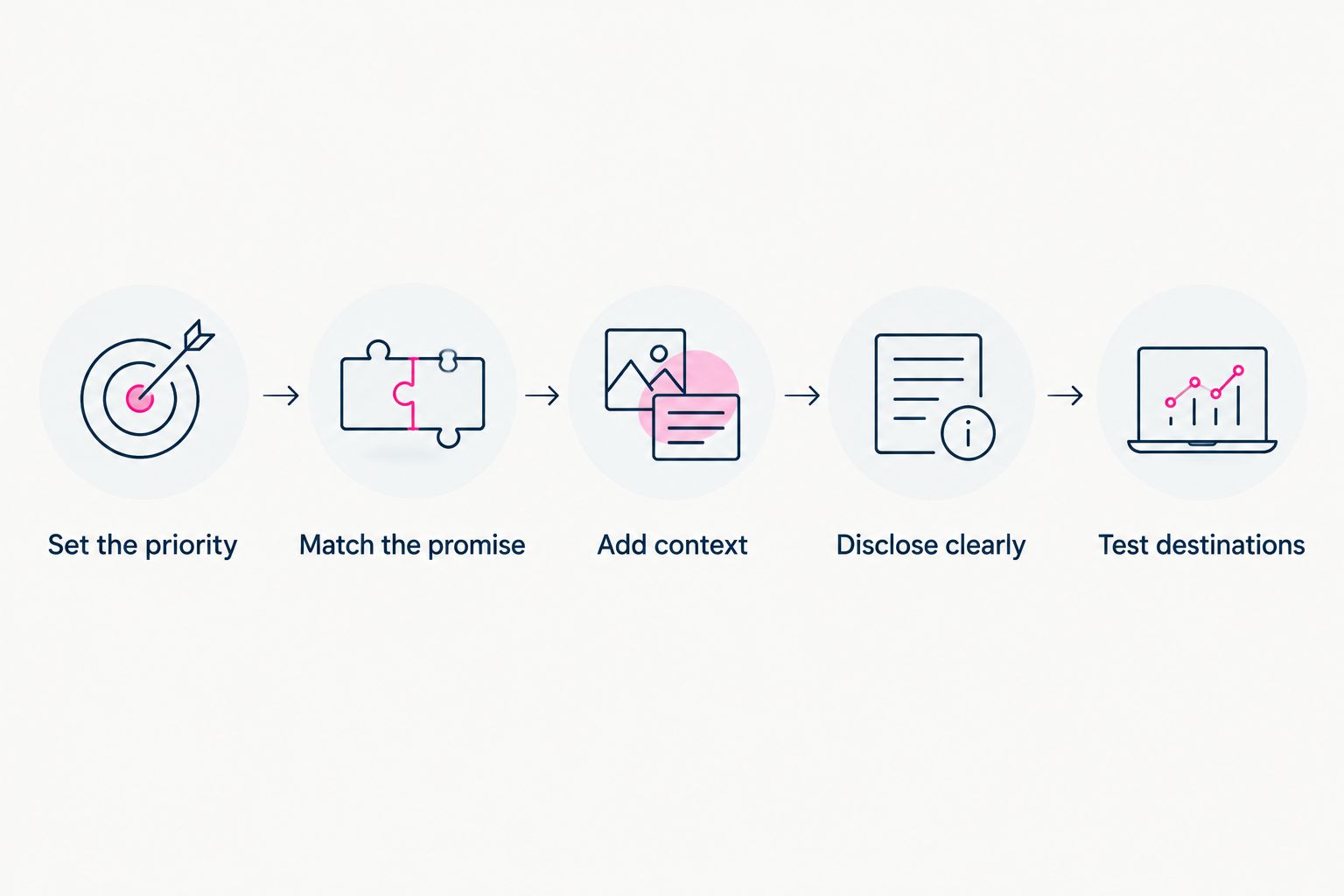
Build the page around the recommendation your visitor came to find.
Choosing the right fit
AkaMe is best for creators who want a personalized creator website on their own domain that links to existing affiliate destinations. Subscriptions, products and services can remain on the platforms where you already run them; the website brings the important links together.
With AkaMe, domain registration and publishing are handled for you. You can customize the page, get photo selection assistance and preview the result before checkout. Photo assistance supports your choices rather than replacing them.
The practical benefit is a recognizable branded destination without having to manage the initial domain setup yourself. Choose a domain that fits your creator identity, then use the preview to check whether the page represents you and makes the intended links easy to find.
The boundary is equally clear: an organized creator website does not write your product reviews or replace the merchant's checkout. If visitors need detailed buying guidance, create that supporting content and link to it.
Carrd suits creators who prefer direct control over website building and domain configuration. If you are comparing Linktree or Linkme, assess the actual workflow you need: how you organize recommendations, present your identity and manage the destination you share. Compare current product details rather than assuming every link-in-bio website builder works the same way.
In 2026, choose the setup that lets you maintain a useful page consistently—not a feature list you will never use.
How do you know whether the page is doing enough?
Follow the visitor's journey before judging the design. Can someone identify the recommendation from your latest content, understand the affiliate relationship and reach the intended destination without guessing?
Separate 2 outcomes: an outbound click and a confirmed affiliate purchase. A page click shows that someone followed the link; it does not establish that a sale occurred or that commission was approved.
Use the reporting your page tool and affiliate program actually provide. Do not assume identical attribution across systems, and do not change the layout based on a single unexplained result. First check whether the content, link label and destination all describe the same offer.
For a useful 2026 review, inspect the full journey again whenever you change your main recommendation. A page that was clear for one campaign can become confusing when the content changes but the labels do not.
FAQ
Can I start affiliate marketing without a full website?
Yes, you can use a link in bio page when your content supplies the explanation visitors need. Check the affiliate program's rules for permitted promotional channels and destinations.
Do I need an affiliate disclosure on my bio page?
Yes, disclose the affiliate relationship clearly where people encounter the recommendations. A bio-page disclosure does not replace disclosures needed in the posts or videos that contain your endorsements.
Should every button go directly to an affiliate product?
No, send visitors to the next useful destination. Use a direct affiliate link for an informed visitor and supporting content when someone still needs help choosing.
Will a custom domain make my affiliate links rank higher?
A custom domain alone does not establish better search rankings. Its practical role here is giving your creator website a recognizable branded address.
Can an OnlyFans creator use the same website for affiliate recommendations?
Yes, a creator website can organize affiliate recommendations alongside other business destinations. Keep link labels and disclosures clear, and check the relevant platforms' and affiliate programs' rules.
Does AkaMe replace my affiliate program or store?
No, AkaMe provides a personalized creator website that brings your important links together. Your affiliate program, store or subscription service continues to handle its existing role.
One last thing
Your best affiliate button might lead to an explanation rather than a checkout. If a visitor needs help choosing, a useful comparison is the more direct route to an informed decision—even though it adds a page.
Start with the recommendation, not the layout. Preview your AkaMe creator website, personalize it around the links that matter and explore a domain that fits your name.
Preview your creator website
Personalize your page, bring your links together and explore a domain that fits your creator identity.